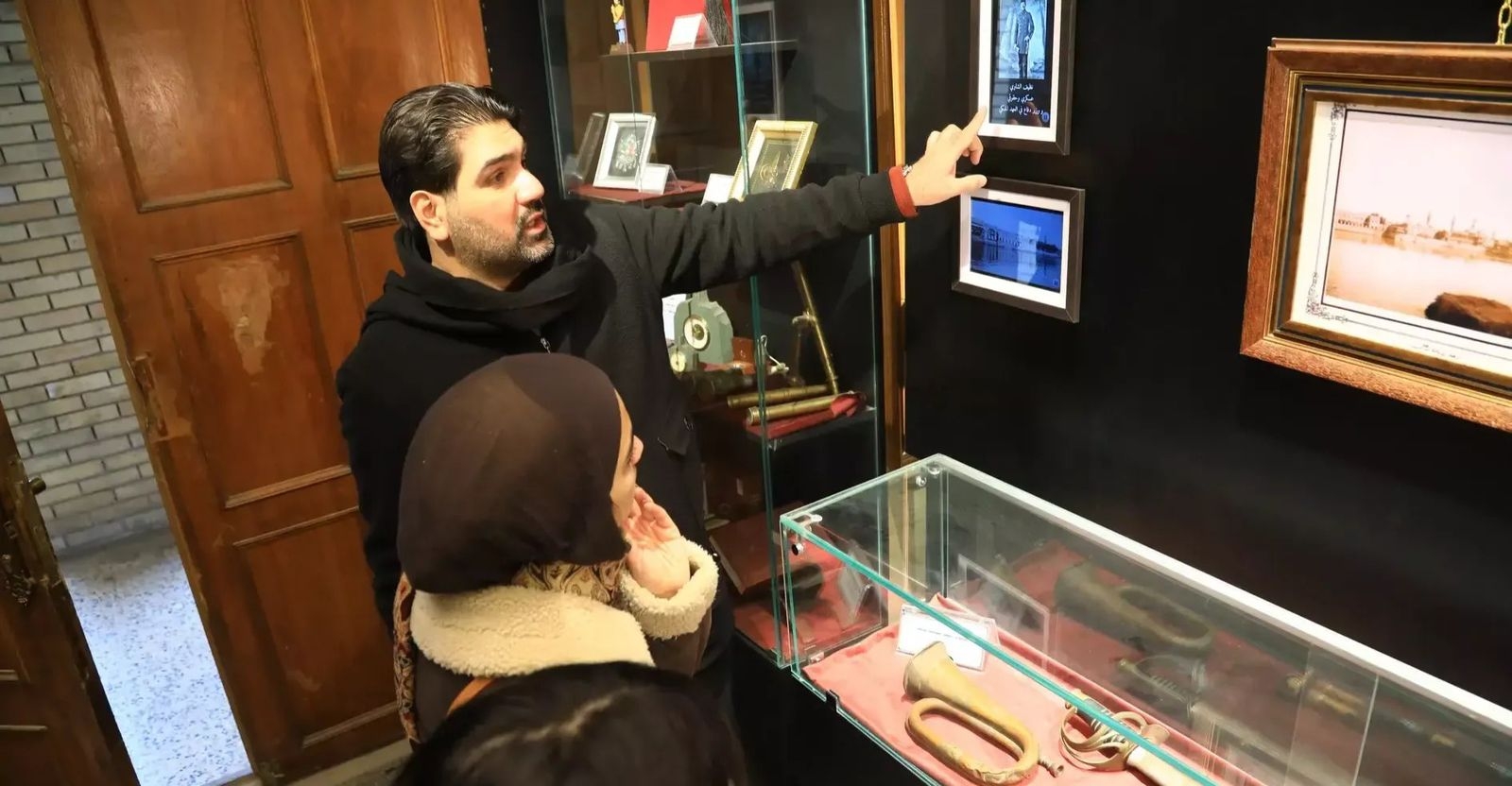
The first artificial‑intelligence‑supported museum in Iraq has opened in Baghdad to showcase archives from the Ottoman era. The museum is located inside the Cultural Center building, which dates back to the Ottoman period, and displays photos, documents, and drawings that have been colorized and restored using AI technologies. It also documents the history of the Rushdiya School in Baghdad, where several prominent Iraqi officials were educated.
According to the newspaper’s report, the museum—housed in the Cultural Center building overlooking the Tigris River—now welcomes visitors to view artifacts and documents from the Ottoman era in Iraq using modern display technologies.
The report quoted Talib Issa, head of the Baghdad Cultural Center, saying that dozens of documents related to the Ottoman period in Iraq were transferred from Istanbul and are now on display in the museum.
The museum contains numerous photographs, drawings, and documents from the Ottoman era in Iraq. It also highlights the history of the Baghdad Cultural Center, which was commissioned by the Ottoman governor Midhat Pasha.
Haider Abed, head of the Information and Technology Department at the Cultural Center, said that the museum is the first AI‑powered museum in Iraq, adding that it tells the story of the Ottoman era in Iraq through artificial intelligence.
He noted that the number of photographs exceeded the number of video recordings, and over time, some of these historical images lost their clarity. They were therefore restored and colorized, giving them a more modern appearance.
Abed also discussed the Rushdiya School during the Ottoman period, which offered courses in Turkish, Arabic, mathematics, history, geography, and other subjects. The museum also displays AI‑generated images related to the school where Ottoman‑era soldiers received their training.
He added that the museum combines history and digitization through electronic archiving and artificial intelligence. Anyone wishing to explore Ottoman‑era archives digitally rather than through written documents can visit the museum for research purposes.
Abed reminded that among the school’s notable graduates were former Iraqi Prime Minister Nuri al‑Said and the founder of the Iraqi army, Jaafar al‑Askari.
According to the report, the Rushdiya School in Baghdad is considered one of the most important examples of the Ottoman Empire’s educational modernization efforts in the 19th century. It is regarded as one of the foundational institutions of modern education in Baghdad, where both civilian and military officials were trained.
“Trump issues instructions: ‘Prepare for a long siege on Iran.’
“U.S. official: Trump is not satisfied with the Iranian proposal.