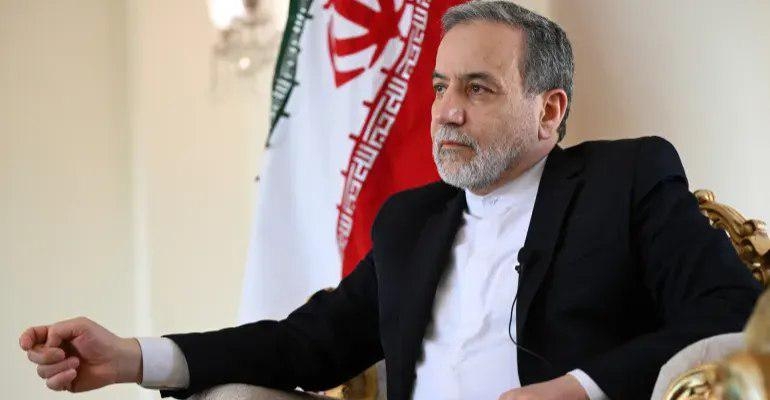
Iranian Foreign Minister Abbas Araghchi declared on Wednesday that his country "never trusts the United States as an honest negotiator," asserting that experience has proven Washington's lack of credibility across various issues, even as Iran continues to pursue diplomatic avenues.
Araghchi stated that when Iran attacked the U.S. base in Qatar, the foreign ministers of the Gulf Cooperation Council (GCC) countries traveled to Doha to express solidarity with Qatar and prepare a joint statement. He noted that he contacted the foreign ministers of the six GCC member states and requested that his name also be included at the bottom of the statement to affirm Iran’s solidarity with Qatar.
He clarified that Iran has no issues with Qatar and that the attack was not directed at it but rather targeted a U.S. base located on Qatari soil. He expressed regret over the presence of the base in Qatar.
Reiterating his stance, Araghchi emphasized that Iran does not trust the United States “at all” as a sincere negotiating partner, claiming that Washington has not been honest in any matter. He added that the erosion of trust in negotiations with the U.S. has built up over time, even though Iran had previously engaged in talks without full confidence.
In another part of the interview, the Iranian foreign minister criticized the three European countries involved in the nuclear deal, saying their actions have made the diplomatic path more difficult and, in his words, “dealt a blow to diplomacy” that he believes cannot be easily repaired.
He also mentioned that negotiations between Iran and the International Atomic Energy Agency (IAEA) had resulted in a framework agreement signed between him and IAEA Director Rafael Grossi in Cairo, which he considered evidence of Iran’s goodwill and willingness to cooperate with the agency.
Araghchi explained that Iran remains open to diplomatic efforts, but this initiative was completely ignored, while the European countries and the United States moved within the UN Security Council to activate the “snapback” mechanism and reinstate previous resolutions.
He concluded by saying that the Cairo agreement no longer holds the necessary effectiveness and stressed that Iran must reconsider how it cooperates with the IAEA—something he said will happen.
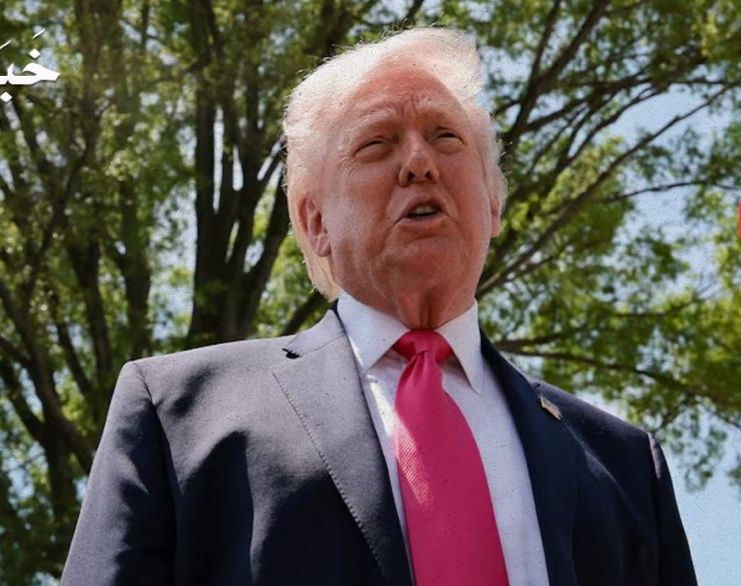
“Trump issues instructions: ‘Prepare for a long siege on Iran.’
“U.S. official: Trump is not satisfied with the Iranian proposal.