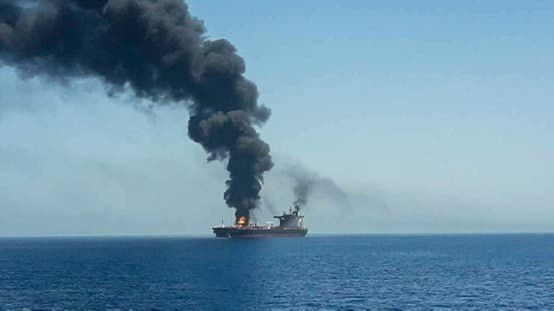
Iran’s military announced that it rejects the passage of any oil through the Strait of Hormuz, raising fears of disruption to global oil supplies. The strait, through which 20 million barrels pass daily, is one of the world’s most critical trade routes. Analysts warned that shutting it down could push up global prices for oil and other commodities and worsen economic crises in countries such as China and India. Experts noted alternative routes, such as pipeline networks in Saudi Arabia and the UAE, but said they are insufficient to offset the damage caused by a full closure.
This escalation follows recent U.S. and Israeli strikes, which immediately affected global markets, driving oil prices higher amid growing concerns over disruptions to one of the most important international trade corridors.
Analysts caution that closing the strait—either physically or due to security risks—could drive up prices of goods and services worldwide and hit major economies like China, India, and Japan, which rely directly on Gulf oil.
Brent crude rose to $82 per barrel on Monday, while the cost of chartering a supertanker to transport oil from the Middle East to China jumped to more than $400,000—a record high.
Gulf economies themselves would also suffer, given their dependence on energy exports. Iran, which exports around 1.7 million barrels per day according to the International Energy Agency, generated $67 billion in oil revenues in the fiscal year ending March 2025—its highest level in a decade.
But the biggest impact would be felt in Asia: in 2022, 82% of the oil leaving the strait went to Asian countries, and China alone buys about 90% of Iran’s oil exports. Since China uses this oil to produce goods exported worldwide, any price increase would ultimately reach consumers across the globe.